Research Statement
For more than fifteen years, I have developed a research-based art practice around a central question: how can art frame the global climate crisis in ways that alter perception rather than merely deliver information? My projects begin in specific landscapes where global heating is materially and scientifically legible—retreating glaciers, ancient ice, aridifying forests, and other threatened environments. Through sustained fieldwork, I draw, photograph, write, and observe. In the studio, I translate those records into reduction woodcuts and multiple-block woodcuts, pigment prints, mixed-media works, and artists’ books. The work is neither scientific illustration nor detached landscape description, but an effort to make ecological change perceptible as lived, physical, and temporal experience.
Place and process are inseparable in my art practice. I develop each project, conduct its fieldwork, make the drawings and photographs, write its texts, and produce the finished artworks in the studio. For any given project, this sequence typically unfolds over multiple years. The artworks utilize first-person perspectives and representational imagery to introduce a photojournalistic register—an insistence that what is pictured is real. I rely on the inherent labor and materiality of the mediums I use—the hand-carved woodblocks and hand-printed mixed-media works on paper—to complicate any claim to simple objectivity. Each artwork is simultaneously a record, an interpretation, and a constructed encounter. I occasionally invite scientists, philosophers, writers, or fellow artists into the work as interlocutors and artist’s book collaborators.
Each project begins with the urgency of the climate crisis as it is lived now, while recognizing that its temporal horizon exceeds the present. Through durable forms—printmaking, archival pigment prints, and artists’ books—I want specific places and conditions to remain available to future attention, even as they change. Across generations, the artwork’s meaning may shift: what now functions as an act of witness may later be read as a record of what we, at the beginning of the twenty-first century, chose to see, value, and care for. The artwork is therefore both an account of a crisis in progress and a document of the attention it received.
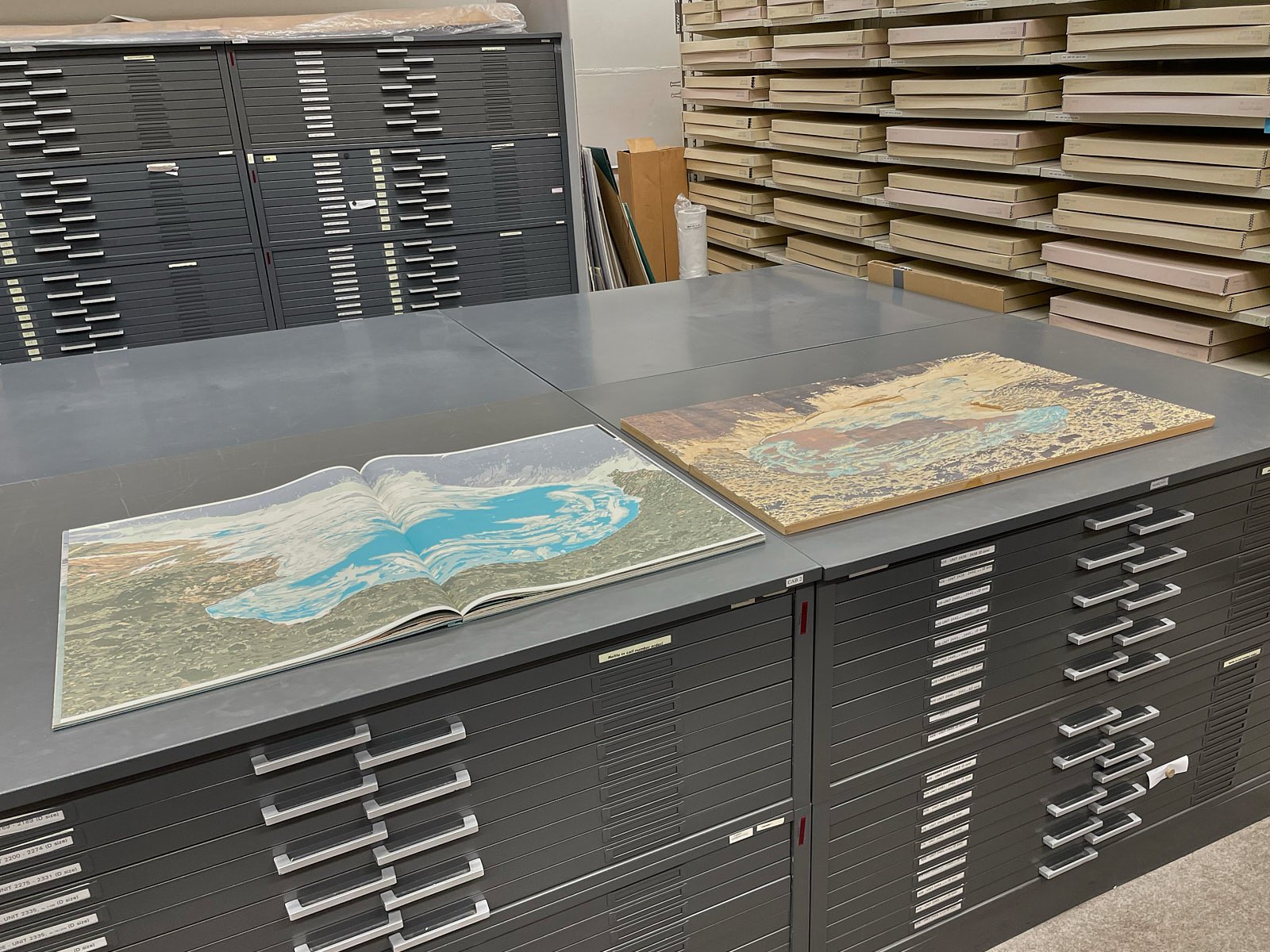
The Last Glacier artist’s book and the Grinnell Glacier woodblock at the U.S. Library of Congress’s acquisition facility. This reduction style woodblock and its subsequent print are the only known such reduction block + its print pairing in the institution’s collection.Teaching Approach
My approach to teaching begins with the belief that art and scholarship are forms of inquiry: ways of asking difficult questions, testing ideas, and making new knowledge. As an associate professor in Clemson University’s Department of Interdisciplinary Studies, I teach courses at the intersection of contemporary art, environmental humanities, rhetoric, and global climate change. My courses bring theory, research, praxis, and creative production into conversation through scholarly writing, creative projects, and other forms of making.
I encourage students to connect their intellectual and creative interests to consequential public questions. Fieldwork, collaboration, and cross-disciplinary exchange are central to my own artistic research, and I bring these methods into the classroom. At the same time, my twenty years teaching printmaking and studio art have taught me to balance conceptual ambition with sustained material practice.
Whether working with doctoral students, MFA candidates, undergraduates, or National Scholars, I strive to create structured, generous, and intellectually open environments. I see teaching as a collaborative process in which students develop the confidence, rigor, and imaginative independence to pursue meaningful work of their own.
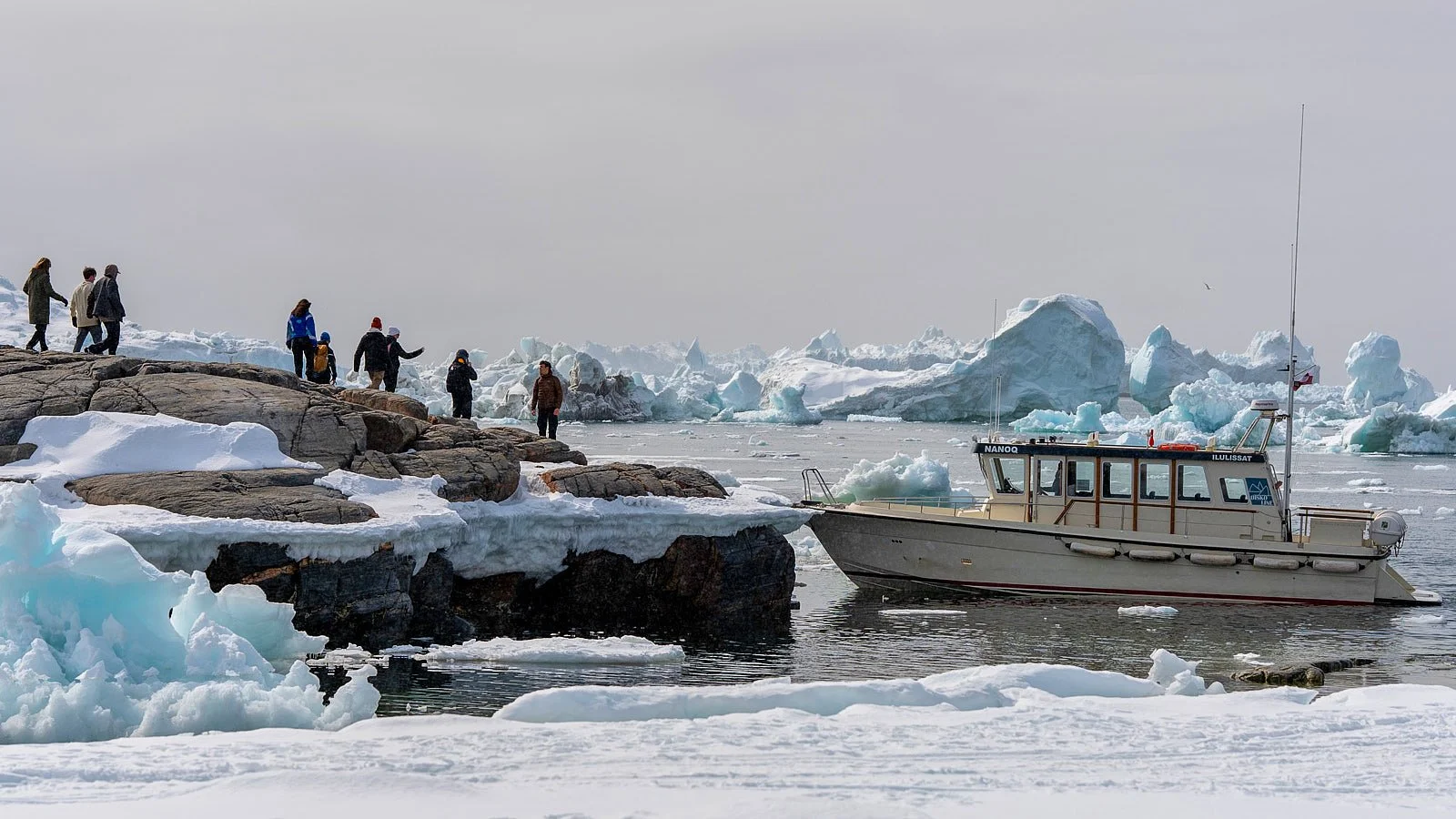
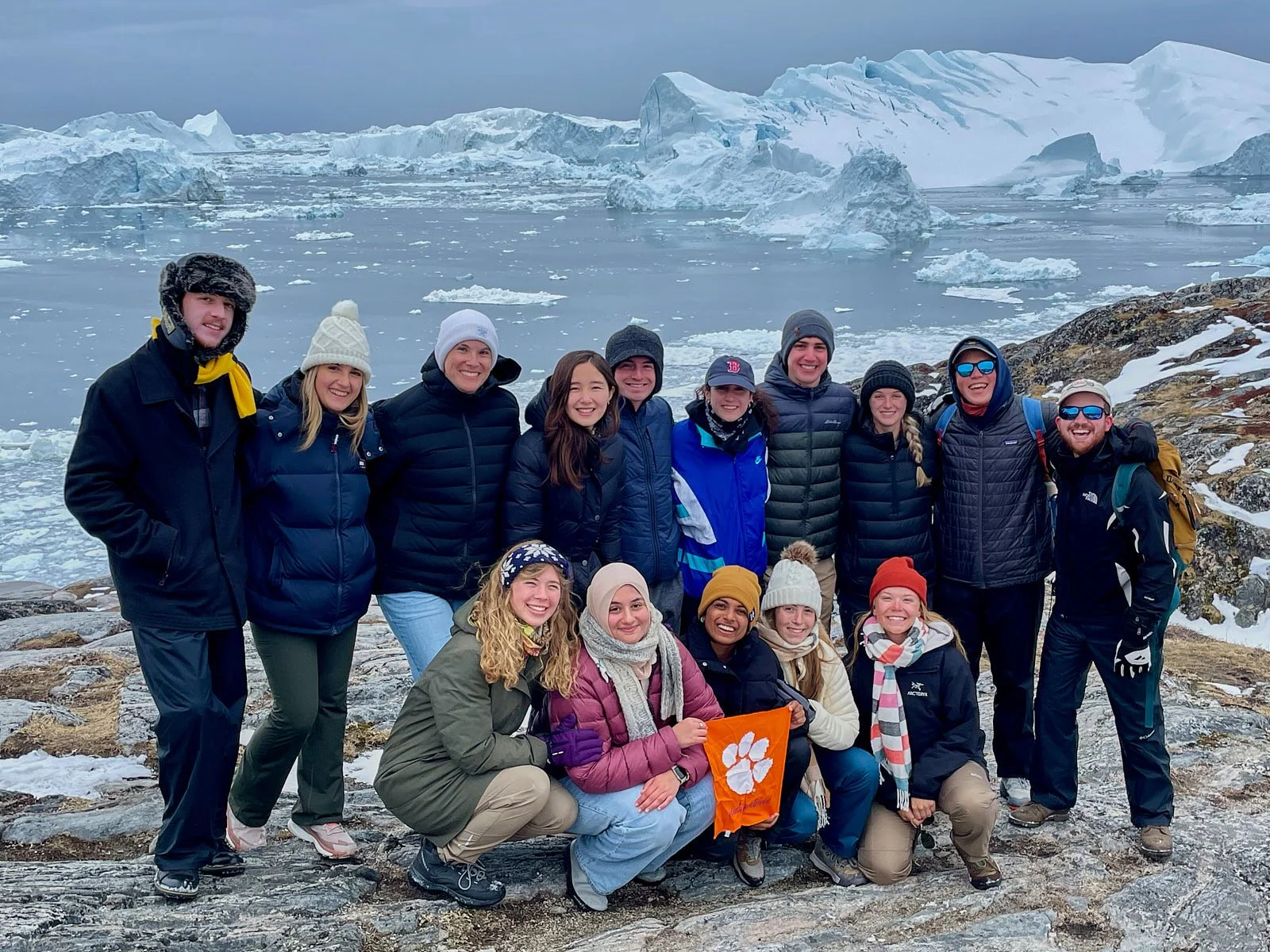
Study abroad experience in Greenland for National Scholars Program students from Clemson University. 2024.
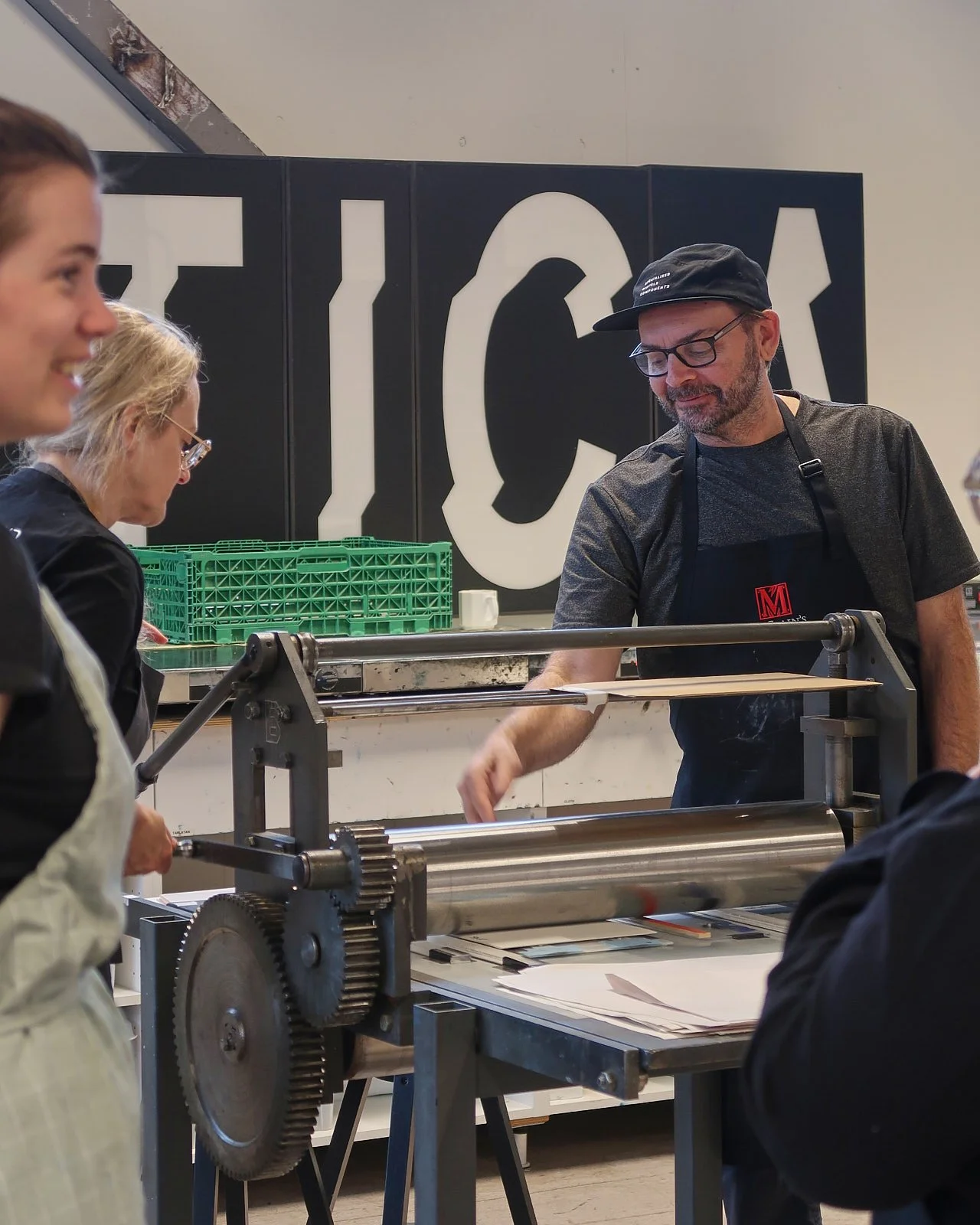
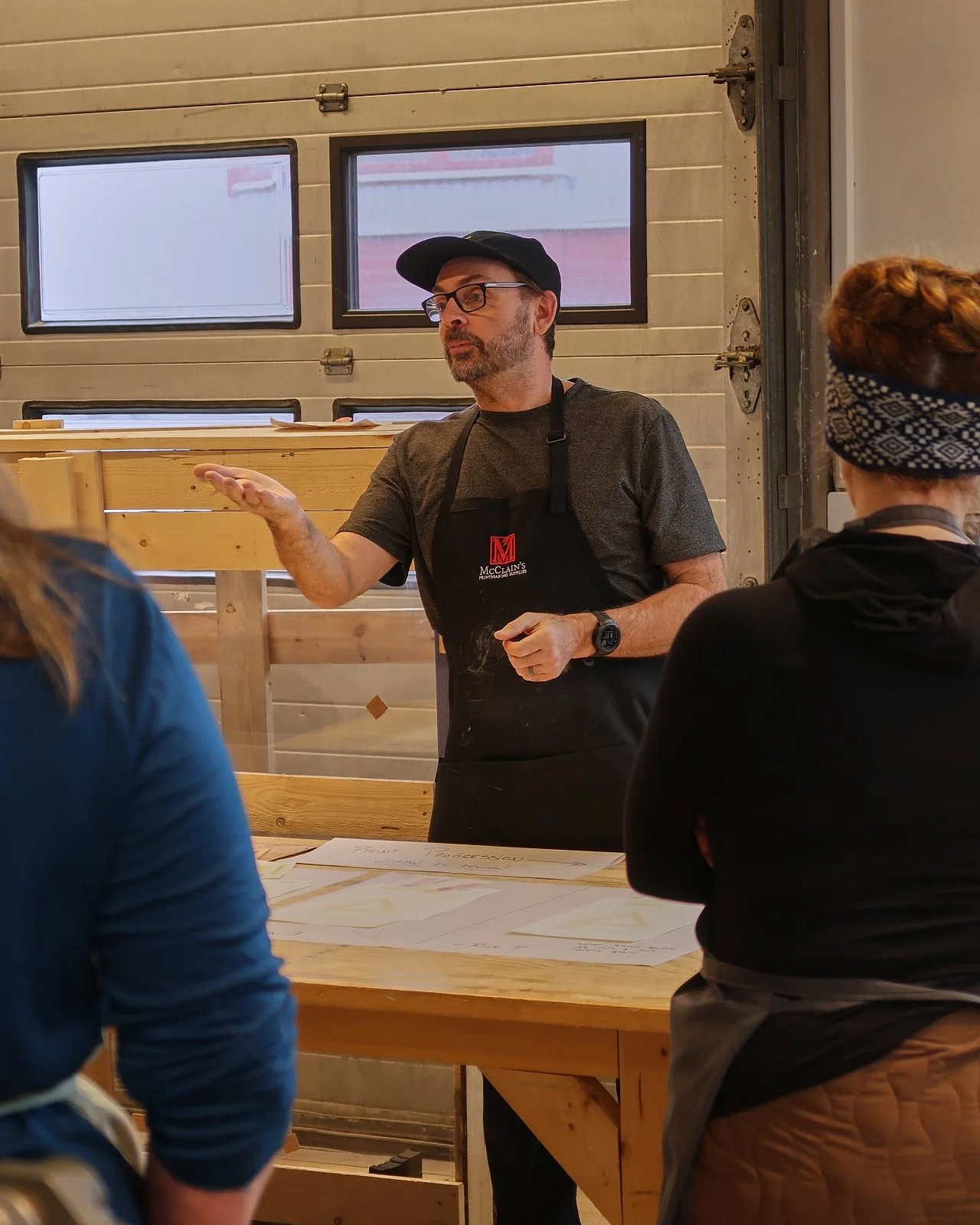
Anderson leading a workshop on woodcut printmaking at Artica Svalbard. 2026.